
An appliance breakdown doesn’t automatically mean insurance will pay for it. Homeowners insurance in Galveston generally covers appliances as personal property when damage results from a peril named in the policy, but not repairs caused by age, poor maintenance, or ordinary wear and tear.
It’s sensible to understand what your policy covers before relying on it, especially when a claim involves an appliance or fire damage. The details matter: what caused the loss, which coverage applies, and what limits, deductibles, and exclusions affect the protection.
This guide explains what to review for appliance and fire coverage, how to compare quotes on equal terms, and why windstorm and flood protection deserve attention in Galveston. It also covers factors that influence insurance costs and how local insurance support can help you review your policy.
Key Takeaways
- Review how your policy treats fire damage across primary, secondary, and rental homes, and identify the coverage limits that apply to each property.
- Compare quotes with matching coverage, then weigh deductibles, exclusions, endorsements, and whether losses are settled at replacement cost or actual cash value.
- In Galveston, consider windstorm and flood protection separately when assessing what your homeowners policy covers.
- Understand which details shape your premium and how local guidance can help you review homeowners, windstorm, flood, and renters coverage.
Are fires covered by home insurance?
In Galveston, homeowners insurance covers fire damage when the policy treats fire as a covered cause of loss, subject to its limits and exclusions. The declarations page and policy wording show what applies to the dwelling and personal property. Appliances are generally covered as personal property against perils named in the policy, but repairs caused by age, poor maintenance, or ordinary wear and tear typically aren’t covered.
Make sure the policy reflects how the home is actually used. A primary residence, a second home used occasionally, and a rental property have different uses that can affect the policy needed and the information considered by an insurer. Tell the insurer if you rent the home to tenants or leave a second home vacant for extended periods. Compare the listed property address, occupancy, insured names, and limits with the home’s actual use.
When reviewing homeowners insurance in Galveston, check flood protection separately from fire coverage. Standard homeowners insurance does not cover flood damage, so read the policy and any endorsements for the specific protection provided. Windstorm coverage also deserves attention in this coastal area. Don’t treat a quote or verbal summary as proof that coverage is active. Check the issued policy, declarations page, and endorsements for its effective status and limits.
Sewer backup and drain damage also require careful review of the policy wording. Look for terms describing water backing up through a sewer or drain, any endorsement addressing that loss, and its limit and deductible. Flood coverage and sewer-backup protection aren’t interchangeable. For a fire claim, check whether the policy covers building repairs, personal belongings, or both, then review the limits and exclusions. Keep appliance receipts and a household inventory to help document damage and support a claim review.
What should I look for when comparing home insurance quotes in Galveston, TX?
Compare quotes with the same coverage types and limits to make the differences clear. Insurers offering homeowners policies in Galveston may assess a home differently based on its location, condition, and use.
Requesting Insurance Quotes
Give each insurer consistent information about the property, its age and condition, who lives there, and how it’s used. Provide the same requested dwelling limit and personal property details with each quote request. This helps you compare similar proposals rather than treating different coverage packages as equivalent. Keep each written quote and coverage summary together for review.
Comparing Quote Details
Review the dwelling and personal property limits, deductibles, exclusions, and endorsements in every proposal. Compare whether covered property losses are settled using replacement cost or actual cash value. These terms affect how a covered loss is valued. A lower premium alone doesn’t show whether two quotes provide equivalent coverage.
On the Texas coast, a homeowners policy might not cover wind and hail damage, according to the Texas Department of Insurance. Read the policy wording for these perils and any related deductible or endorsement. Compare limits for other protections, too, rather than assuming similar policy names mean matching coverage.
Insurer Availability
The insurers available depend on underwriting decisions for the specific Galveston property. Occupancy, construction, condition, and location can affect whether an insurer offers a quote and the terms it includes. Compare the proposals you receive by coverage, exclusions, and deductibles, not just by insurer name or quoted premium.
Before choosing, make a side-by-side list of limits, deductibles, exclusions, endorsements, and valuation terms. Mark differences that affect the protection you need, then weigh them against the premium. This gives you a practical basis for selecting coverage that fits the property and household.
Local agency guidance and claims support
In Galveston, a local agency can help you understand policy terms, property details, and the steps involved in reporting a loss. Bring a current declarations page and describe how the home is used, whether as a primary residence, second home, or rental. Clear details help focus the conversation on the property and coverage questions that matter.
Independent agencies can work with more than one insurance company, giving homeowners a place to discuss coverage choices and policy differences. The agency can explain terms such as deductibles, limits, and exclusions in plain language. For example, ask how a listed deductible applies to a particular covered loss, then compare the answer with the policy wording.
For an in-person visit, use the agency’s published Galveston address and business hours to plan your trip. Keep those details with your policy documents, along with the agency’s phone number and the insurer’s claims contact. Having essential information together can help if a storm, fire, or other loss makes it difficult to search through email or paperwork.
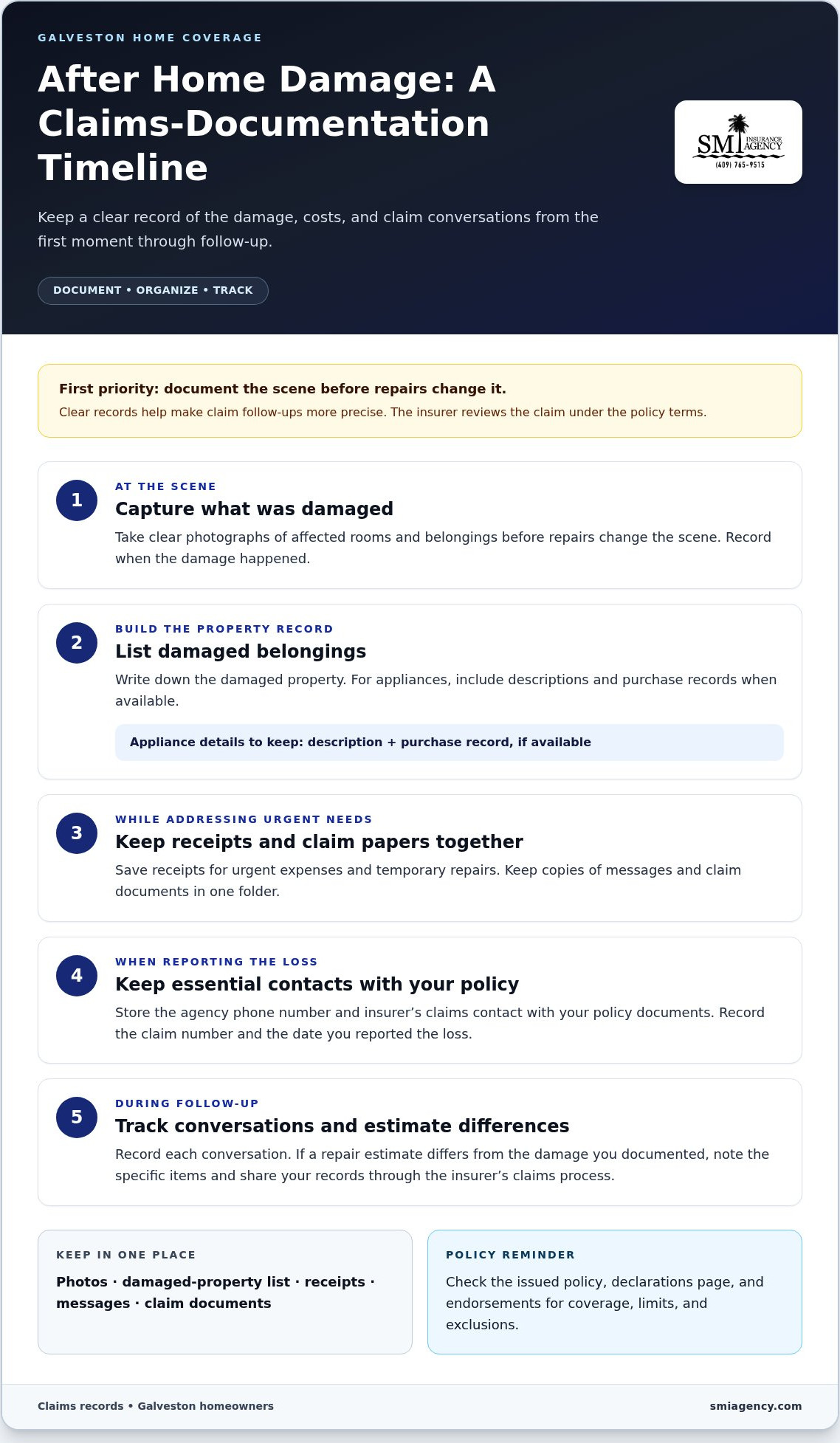
After damage occurs, document the scene before repairs change it. Take clear photographs of affected rooms and belongings, record when the damage happened, and keep receipts for urgent expenses and temporary repairs. List damaged property, including appliance descriptions and purchase records when available. Keep copies of messages and claim documents in one folder.
An agency can help clarify policy language and organize questions, while the insurer reviews the claim under the policy terms. Record the claim number, the date you reported the loss, and each conversation. If a repair estimate differs from the damage you documented, note the specific items and share your records through the insurer’s claims process. Good records make follow-ups more precise.
Galveston homeowners insurance costs
Home insurance costs in Galveston vary by property and selected coverage, so one advertised figure can’t describe every household’s premium. A quote reflects the home’s insured value, selected limits and deductibles, and included protections. Compare the coverage behind each price, not just the final amount. A lower premium may come with different limits or exclusions.
Start with the dwelling limit and how it relates to rebuilding the home. Then review the deductible, personal property limit, and any separate windstorm or flood coverage. These choices affect both the protection shown in the quote and its cost. For example, two proposals may look similar until you compare their deductibles or find that one lists a coverage separately.
Galveston homeowners can also consider steps that may help manage premiums. Safety improvements, bundling policies, and reviewing coverage annually are potential cost-management options. Keep a record of home updates, such as improvements to safety features, and include current property details when requesting a revised quote. Review any change alongside its coverage terms.
Changes to your property are a practical reason to revisit your coverage. A renovation may change the amount of coverage needed, while new belongings may affect the personal property limit. If you add a safety feature or combine policies, compare the updated proposal with your existing policy. Keep the declarations page and quote together, and note changes to limits, deductibles, and listed protections.
Use an annual review to check whether your policy still matches the home, its contents, and the coverage you intend to carry. Compare updated terms side by side before choosing. Review your homeowners coverage options and request a quote based on your property details.
SMI Insurance Agency: Homeowners
SMI Insurance Agency offers homeowners coverage for Galveston residents reviewing protection for a primary home, second home, or rental property. Consider a review after a change in occupancy, a renovation, or when your current limits no longer fit your needs. The agency also offers windstorm and flood coverage to consider alongside your home policy, as well as renters coverage for tenants seeking protection for personal belongings.
Bring your current policy details and note what you want to discuss, such as updated property information or questions about coverage limits. Comparing these details can clarify what you need from a policy review. Contact SMI Insurance Agency to discuss your homeowners coverage needs.
Make Your Next Policy Review Count
A useful review starts with a clear record of what has changed at home and what you want your policy to protect. Keep your current declarations page, details of recent home improvements, and a simple inventory of valuable belongings together. This gives you a practical starting point for discussing homeowners insurance in Galveston without relying on memory alone.
Before renewal, note any changes in occupancy, household belongings, or how you use the property. Compare your current policy with updated terms and identify questions about limits, deductibles, or exclusions. A short written list can keep the discussion focused on your priorities and help you see what needs attention.
SMI Insurance Agency can help you review homeowners coverage and consider how your policy fits your property needs. If your circumstances have changed or you’re preparing for renewal, contact SMI Insurance Agency to discuss your next steps. A clear review can help you move forward with a better understanding of your coverage.
Frequently Asked Questions
Are appliances covered under homeowners insurance?
Appliances may be covered when a listed cause of loss damages them, but ordinary mechanical failure isn’t the same as covered damage. For example, fire damage to a refrigerator differs from a refrigerator that stops working because of age. Check the policy’s cause-of-loss wording and personal property terms, then keep purchase records or model details to help identify damaged appliances.
Do residents of Dickinson, La Marque, and Clear Lake need different coverage than those in Galveston?
Not automatically. Coverage needs depend on each home and its exposures, not just its city. Compare the property address, construction, use, and relevant risks in Galveston, Hitchcock, La Marque, Texas City, Santa Fe, Dickinson, San Leon, League City, Kemah, Seabrook, Alvin, Friendswood, Clear Lake, Shoreacres, Bolivar, Crystal Beach, and Houston. Nearby homes can still have different coverage needs.
How Much Does Galveston Homeowners Insurance Cost?
The premium depends on the specific home and policy terms, so there isn’t one cost that fits every Galveston homeowner. The insured dwelling value, coverage limits, deductibles, property characteristics, and included protections affect the quote. To understand the amount, compare written quotes with the same coverage selections, then identify which differences explain a higher or lower premium.
How can I lower my property insurance premium in Galveston?
Review safety features, consider bundling policies, and revisit your coverage each year. For example, list home safety improvements and ask how they affect the quote. Check whether your limits still match the property and belongings, rather than reducing protection without weighing the tradeoff. A premium may change with your coverage choices and property details.
How do coastal risks affect home insurance costs in Galveston?
Coastal exposures can affect which protections appear in a quote and how the policy treats them. Standard homeowners insurance excludes flood damage, and the Texas Department of Insurance notes that a Texas coastal policy might not cover wind and hail. Review each peril, deductible, and endorsement separately. This comparison helps explain how coastal protection choices affect the quoted premium.
What happens if I need to file a claim in Galveston?
Report the loss to your insurer through its claims process. Describe what happened, when it occurred, and which areas were affected. Keep the claim reference and save relevant messages and receipts. If damage continues, take reasonable steps to prevent further harm when safe. Keep details about damaged items available to answer follow-up questions about the property.