
Homeowners insurance quotes depend on the home’s location, age and type, roof construction, claims history, property and belongings, and chosen deductible. The deductible is only one factor: the coverage selected for the home and its contents also shapes the quote. Start comparisons with these details, not just the premium.
It makes sense to focus on price, but a lower premium may come with different coverage or a higher deductible. Compare what each policy protects, where limits or exclusions apply, and how it handles personal liability and mold. For a closer look at how to compare homeowners insurance coverage, weigh coverage types, limits, and deductibles together.
This article explains the main factors that affect home insurance rates and what to review in personalized quotes. You’ll learn how dwelling and personal property coverage differ, how deductibles affect what you pay after a covered loss, and why flood protection may need separate consideration. With those details in view, you can assess which coverage fits your home and needs.
Key Takeaways
- Compare quotes using the same coverage limits and deductibles so you can see how the policy details affect the premium.
- Review how mold damage is treated in the policy, including the circumstances that caused it and any applicable limits or exclusions.
- Consider how your home’s location, age, roof, claims history, and chosen deductible can affect its insurance rate.
- Assess personal liability protection alongside coverage for the home and belongings, and consider separate flood coverage where it fits your needs.
Does homeowners insurance cover mold?
Mold claims don’t have a universal yes-or-no answer. Coverage depends on the cause of the mold and the policy’s terms, exclusions, and limits. Read the mold provisions alongside the section on the original water damage. Note where the water came from, which areas are affected, and when you discovered the problem. Those details help link the mold to the event under review.
Replacement cost is another key part of protecting your home. Homeowners should insure for at least 100% of estimated replacement cost. An inspection may include the home’s exterior, yard, and roof. An interior review may also be requested to verify features affecting replacement cost, such as materials and construction details.
You can compare home and auto insurance as a bundle or as separate policies. Review the combined premium, each deductible, and the coverage limits before weighing discounts. A lower total may reflect different terms, so compare equivalent protections. Home insurance costs and coverage also vary by state and property details; national and state averages don’t determine an individual home’s rate.
Different homes need different policy types. Renters insurance covers a tenant’s belongings, while a landlord may need coverage for a rental dwelling. Coverage for damage inside a condo owner’s unit can depend on the policies and circumstances involved. Most standard homeowners policies don’t cover mobile homes, which need a policy matched to the structure.
Before choosing, list the home’s roof, construction, size, and major features, then compare them with the replacement estimate. Check how the policy treats mold, water damage, personal belongings, and temporary living costs. Compare home and auto options on the same coverage basis, and review exclusions as well as premiums. This makes differences between quotes easier to spot.
What factors affect my home insurance rate?
Insurers consider a home’s location, age, type, roof construction, and claims history. A house with a roof needing repair has a different risk profile from one with newer materials. Previous claims can also affect how an insurer assesses future risk. These details, along with the value of the property and belongings, help determine the premium. Since each policy reflects its selected coverage and deductible, similar homes can receive different rates.
Coverage choices matter, too. Dwelling protection helps pay to repair or rebuild the home after a covered event, while personal property coverage can protect furniture, clothing, electronics, and appliances. Personal liability coverage can help with medical bills or legal expenses, up to policy limits, if you’re responsible for someone’s injury or property damage. A mortgage lender may require insurance on the mortgaged home, making the coverage amount and policy terms important parts of budgeting.
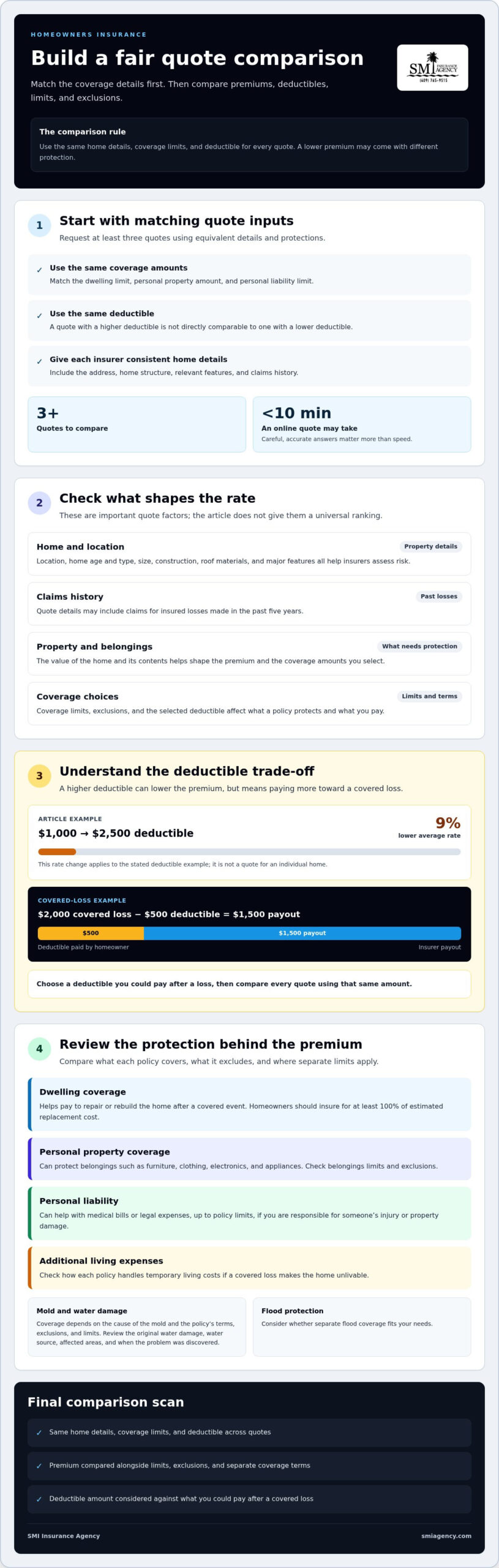
The deductible directly affects both the premium and a covered claim. Raising it from $1,000 to $2,500 lowers the average homeowners insurance rate by 9%. In a separate example, a $2,000 covered loss with a $500 deductible results in a $1,500 payout. Choose a deductible you could pay after a loss, then compare quotes using that same amount.
To understand what drives insurance costs, compare details that affect risk or the insurer’s potential payment: location, roof, claims history, coverage limits, and deductible. For example, the contents limit affects protection for belongings, while a higher dwelling limit changes the amount available for covered repairs. A larger deductible means the homeowner pays more toward a covered loss. Review each quote’s limits, exclusions, and deductible together to understand rate differences and make a sound comparison.
Personalized homeowners insurance quotes
A quote reflects the home details and coverage choices used to calculate its premium. Provide accurate information, then compare policies on matching terms.
Quote Information
Start with the property’s address and basic details about the home. The quote process may also ask about claims for insured losses made in the past five years. Gather accurate information about the structure and your coverage needs before beginning. An online quote process may take less than 10 minutes, but careful answers matter more than speed.
Accurate Quote Comparisons
Compare at least three quotes using the same dwelling limit, personal property amount, liability limit, and deductible. Then review exclusions and any separate limits for belongings, so a lower premium doesn’t hide a meaningful coverage difference. Check how each policy handles additional living expenses if a covered loss makes the home temporarily unlivable. A side-by-side comparison of those terms gives you a clearer basis for choosing.
Credit Score Considerations
Getting a quote doesn’t automatically mean your credit score will change. Whether a credit-related review is part of the process, and how it is conducted, depends on the insurer and applicable state practices. Read the authorization language before submitting personal information. If the request includes a credit inquiry, distinguish it from the quote estimate itself and note what the form says about the inquiry.
Personalized Quote Details
A personalized estimate should reflect the home and coverage you intend to buy, not just a general profile. Consider dwelling protection, belongings, personal liability, deductibles, and expenses for temporary living after a covered loss. Tell the insurer about relevant features and claims history, then ensure each quote uses the same details. This helps show whether premium differences come from coverage, limits, or other policy terms.
What factors affect homeowners insurance quotes and premiums?
A quote reflects the home’s location, type, age, roof construction, and claims history. These details help insurers assess the likelihood and potential cost of a covered loss. A home in an area exposed to hurricanes may be rated differently from one facing fewer weather risks. The property’s replacement needs and selected policy limits also shape the premium. Compare the assumptions behind each quote, not just the final figure.
The coverage amount matters because the dwelling limit sets the maximum available for covered damage, subject to policy terms. The home’s size, construction materials, and features influence rebuilding needs. For example, a custom-built home with specialized materials may cost more to replace than a similar-sized home with standard finishes. Keep property details consistent across quote requests so differences reflect policy terms, not mismatched information.
Deductibles can change both the premium and the amount you pay after a claim. A percentage-based hurricane deductible is calculated from the dwelling coverage limit. With $300,000 in dwelling coverage, a 3% hurricane deductible means the homeowner pays $9,000 before insurance pays for covered hurricane damage. Review whether a quote uses a flat-dollar or percentage deductible, and understand which events trigger it.
Claims history is another rating factor. An insurer may consider previous claims when estimating future risk, while roof condition and home age can affect its view of likely repair costs. A well-maintained roof and accurate property details help produce a quote based on the home as it stands. Report past claims accurately; leaving them out can create differences between an initial estimate and the offered policy.
Before choosing, compare dwelling limits, deductibles, exclusions, and the treatment of wind or hurricane damage. Check that each quote uses the same property details and coverage selections. Then weigh the premium against the amount you would pay yourself after a covered loss. Review homeowners coverage options with those details in hand.
SMI Insurance Agency: Homeowners
SMI Insurance Agency offers homeowners coverage for people comparing protection for their house, belongings, and liability needs. If you’re also reviewing windstorm or flood risks, consider those as separate coverage options alongside a homeowners policy. Renters coverage is for tenants protecting their belongings, rather than homeowners insuring a dwelling they own.
Before discussing coverage, gather property details, the limits and deductibles you’re comparing, and any concerns about specific risks. This gives you a clear starting point for considering how homeowners, windstorm, flood, or renters coverage fits your situation. Contact SMI Insurance Agency to discuss your homeowners coverage needs.
Make Your Next Coverage Review Count
A home changes over time, and your insurance decisions should keep pace. Before requesting homeowners insurance quotes, record renovations, major purchases, and changes in how the property is used. Keep receipts, photographs, and updated room or building details together. These records can help you describe the home accurately and identify questions about limits or coverage terms.
Use that information to decide what you want your policy to protect and which trade-offs you’re comfortable making. Review the proposed terms, not just the premium, and keep a copy of the selected policy with your household records. A clear record provides a practical starting point for future reviews and conversations about your coverage.
Contact SMI Insurance Agency to discuss your homeowners coverage needs. Take the next step with your home’s details and coverage priorities in hand.
Frequently Asked Questions
What affects the cost of homeowners insurance?
Home insurance costs depend on the house’s location, age, construction, roof, claims history, selected limits, and deductible. For a practical review, note changes since the last policy term: a finished basement, added room, new roof, or costly equipment can affect the information used to rate coverage. Update those details before renewal so the policy reflects the property as it stands.
How can an agent help protect your home?
An insurance agent can help match policy details to the property information you provide and explain how limits and exclusions apply. For homeowners in Galveston, Hitchcock, La Marque, Texas City, Santa Fe, Dickinson, San Leon, League City, Kemah, Seabrook, Alvin, Friendswood, Clear Lake, Shoreacres, Bolivar, Crystal Beach, and Houston, include local property concerns in the review. Bring your current policy and questions.
What is the average cost of home insurance and how is it calculated?
An annual premium reflects the insurer’s assessment of the property and selected coverage terms, not one formula shared by every company. The quote uses details such as location, home characteristics, claims history, limits, and deductibles to set a premium for that policy. Treat a national average as context only; compare the actual terms and annual premium offered for your home.
Which homeowners insurance companies should I consider?
Consider an agency that handles homeowners coverage and can discuss property and policy details relevant to your area. SMI Insurance Agency is a practical starting point for homeowners reviewing coverage in its local Texas market. Assess whether the proposed policy addresses the dwelling, belongings, liability, and the risks you want covered, then read the terms before deciding.
How can I save money on my homeowners insurance?
Homeowners can potentially lower their rate by getting a quote at least 10 days before the policy start date. Also review the policy before renewal for coverage that no longer matches your household, such as belongings sold or renovations completed. Keep property information consistent when comparing options, so savings aren’t based on reducing protection unintentionally.
What is the average cost of homeowners insurance in the U.S.?
An average doesn’t set the premium for a particular U.S. home. The insurer calculates the quote from the address, dwelling characteristics, claims information, selected coverage limits, and deductible, then applies its rating method. Use an average as broad context, not as a household budget. The quoted annual premium and policy terms show the cost for the home being insured.